


Your goal is clear: to attract more organic traffic to your website.
And the smart way to get there involves mastering keywords. To ease the path to finding these crucial keywords, we’ll start with the fundamental definition of a ‘keyword’ in the context of online content.
Then, we’ll discuss the essential steps of keyword research with you in detail.
Let’s begin.
Table of Contents
What is a “Keyword” in Content?
A keyword in content is a specific word or phrase that people type when searching for content-related information online. This is the key that connects your content for the right audience.
For instance, if you have written a blog post about the easy way to make a jute handbag at home, relevant keywords would be make jute bag at home, homemade jute purse, or easy jute bag tutorial.
Why Should You Research Keywords?
To create relevant content based on what your target audiences search, you have to research keywords. Without proper analysis, you can’t find the right words and phrases for your content and improve your SEO.
See the example: Suppose you sell handmade organic cat treats.
- Without keyword research: You might create blog posts titled Our Delicious Cat Snacks or Healthy Treats for Your Meaw. These may be accurate, but they aren’t exactly what people are actively searching for.
- With keyword research: You might discover that people are searching for terms like best homemade cat food, organic cat treats, or homemade cat treat for a healthy stomach.
Using these types of specific keywords in blog posts and product descriptions directly answers your potential customers’ queries. Here, your target audiences are cat owners, specifically looking for organic and healthy options. So your content is more likely to appear in the SERP for those searchers.
However, keyword research gives you more than just improved visibility. Through this process, you get to understand your target customers and their needs well. Thus, you can also tailor your products, services, and overall marketing efforts to better meet those needs.
Understand the Types of Keywords
Not all keywords are equal. Think of keywords like different types of roads leading to your website. Let’s break it down:
- Short and Sweet (Head Keywords): These are basic terms like cat or pet food. They have lots of searches, but it’s also super tough to rank high for them because everyone’s trying.
- Long and Specific (Long-Tail Keywords): These are longer phrases like kitten milk replacer or grain-free cat food for sensitive stomachs. Fewer people search for these, but the people who do are usually looking for something very specific. It means they probably want what you’re selling. Example: Instead of just cat food, aim for best organic cat food for British shorthair cat.
- Asking Questions (Question Keywords): People often type questions into Google, like how to feed a kitten? If you answer these questions in your blog, you can attract those searchers directly.
How to Do Keyword Research
Let’s dive into the techniques you can follow to find those valuable search terms.
Understand Your Niche. Who’s Your Crowd?
Take a step back and think about your business. Understand your actual niche and target audience. Ask yourself:
- What do you sell or talk about? Be straightforward. If you sell handmade jewelry, are you focused on silver rings, beaded necklaces, or something else? – The answer is your actual “niche”.
- Believe in Google Search Autocomplete. Google’s search bar suggestions disclose what people are actually searching for in real-time. By typing in your core topics, you’ll see related long-tail keywords and questions that searchers are actively looking for. Pick them and analyze them to gain direct insight into user intent. It’ll help you discover relevant search terms you might not have thought of.
- Who are you trying to reach? Imagine your ideal customer. What are their interests? What problems do they have that your product or service can solve? What kind of language do they use?
Maybe you run a business of cat food. Your “crowd” is likely cat owners, maybe busy people, who need ready-made but healthy foods for their cats. - Using Digital Tools for Keywords: Got clear about your business? Now for the fun part, using tools to see what people are searching for.
Don’t worry, it’s maybe not magic, but it’s not as scary as it sounds!
- Google’s Free Helper (Keyword Planner)
You can access Google Keyword Planner with your Google account easily. This free tool helps you get keyword ideas. Also, it shows you roughly how many people search for certain terms. It’s like getting a peek into Google’s search data!
Beyond Google’s own resources, there are other helpful tools you might want to check out as you get more comfortable with keyword research:
Semrush, a popular platform for online visibility management. It presents a robust keyword research tool aimed at empowering your SEO strategy. It provides in-depth keyword analysis, competitor research, site audit features, and more.
Within its extensive suite of features, the Semrush Keyword Overview and Semrush Keyword Magic Tool shine by delivering a wealth of keyword ideas and insightful analytics.
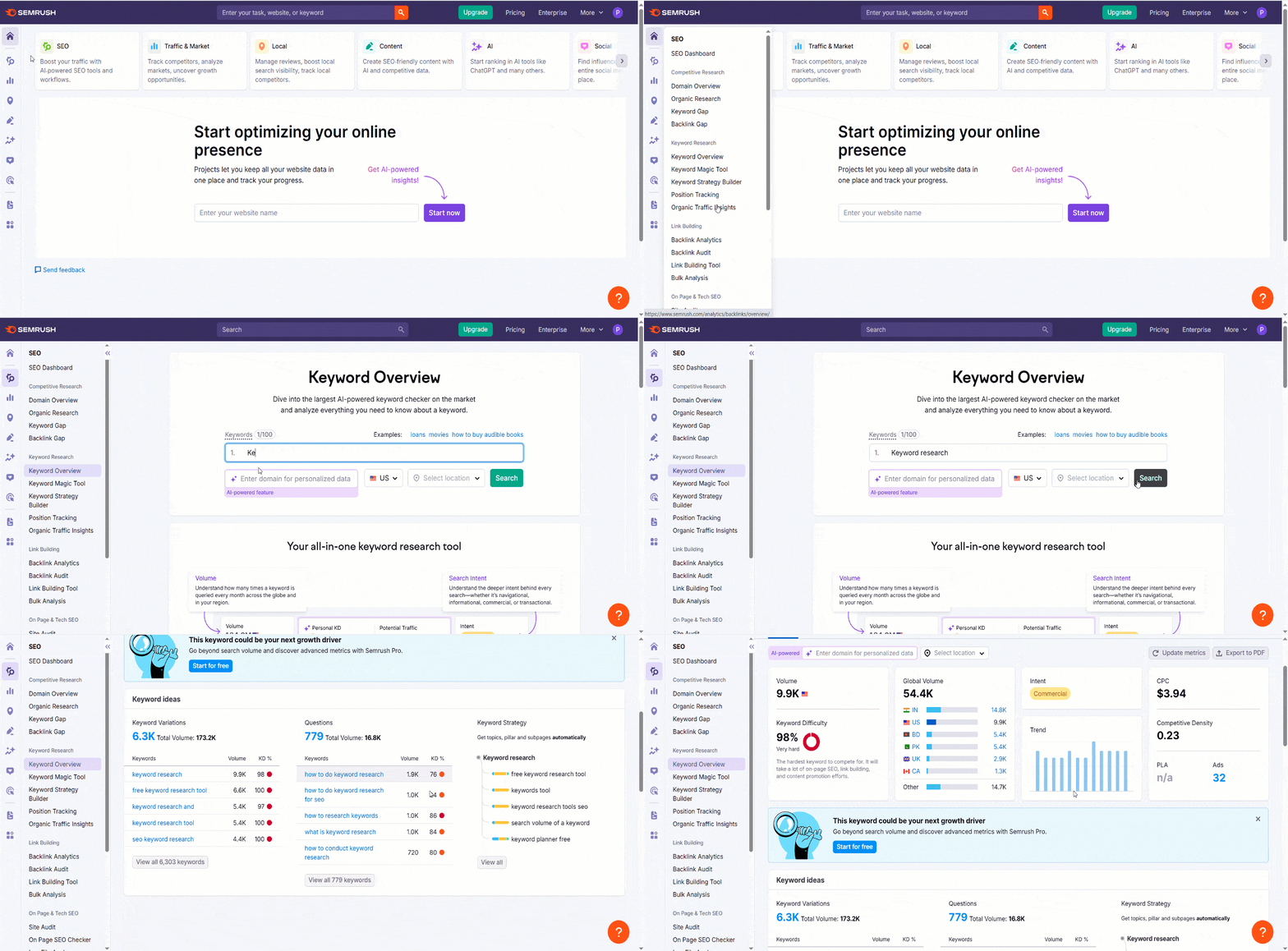
For advanced SEO work, you can pick Semrush.
- Ahrefs
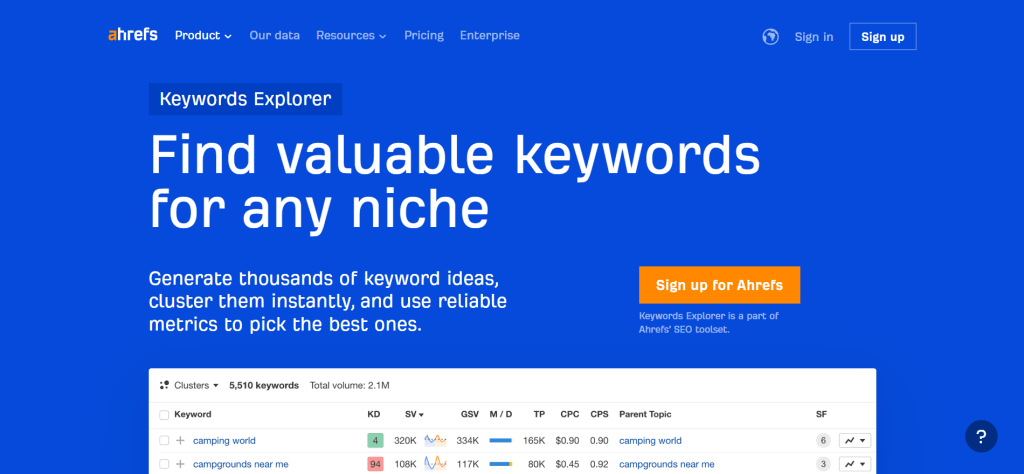
Ahrefs is a standard tool known for its backlink analysis and keyword research capabilities. Esteemed by many SEO professionals, Ahrefs delivers transparent and actionable insights into website authority and keyword opportunities. It makes the tool an indispensable asset for informed digital marketing strategies.
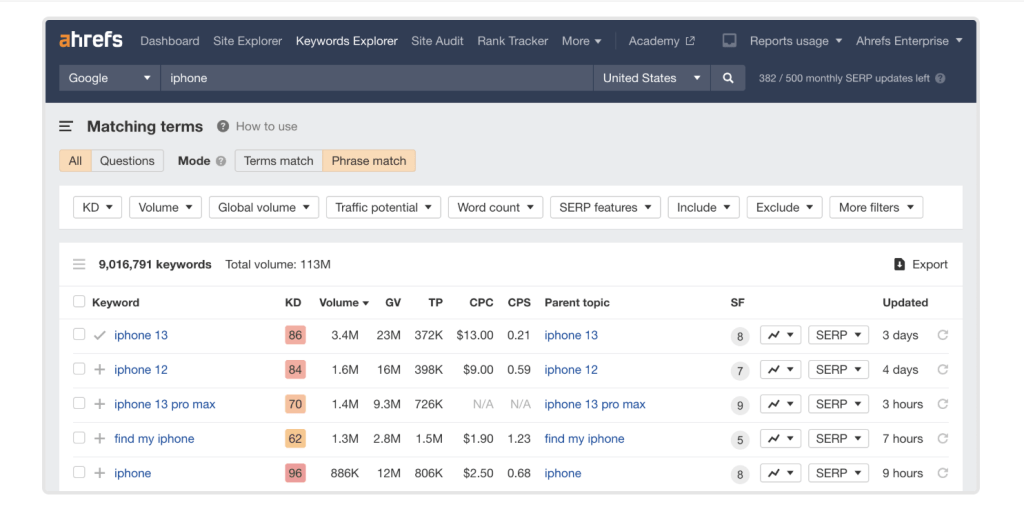
Among Ahrefs’ core offerings, the Keyword Explorer is a strong tool for in-depth keyword analysis. For those seeking accessible solutions, Ahrefs also provides a suite of complimentary tools, including the Keyword Generator, the Keyword Rank Checker, and the Keyword Difficulty Checker.
- Moz
Moz’s Keyword Explorer is another good tool to help you search top-opportunity keywords. It offers more than just volume and difficulty; its unique Organic CTR and Priority Score help identify keywords with traffic potential and achievable rankings. Along with in-depth SERP analysis and features like “Keyword by Topic” and search intent analysis, Moz provides insights for a smarter and more strategic approach to keyword research and content planning.
There are also free tools you can explore to research keywords.
- Free Keyword Research Tool
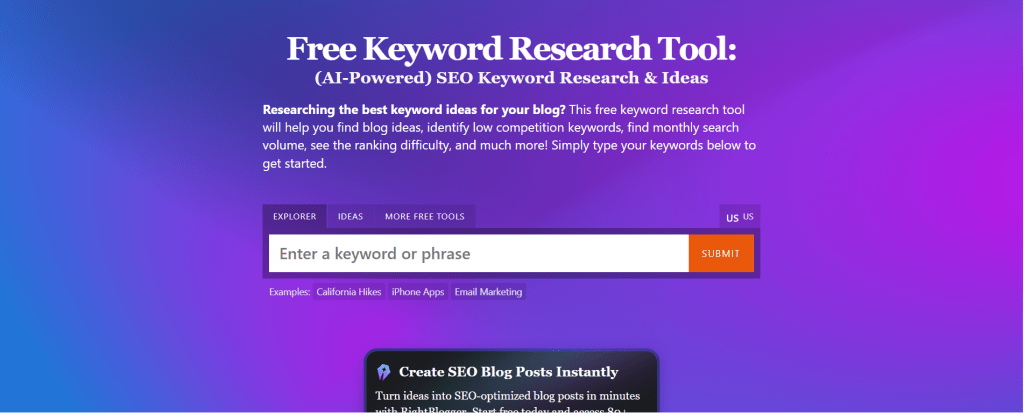
This free, AI-powered keyword research tool aims to streamline the process of finding optimal blog topics and keywords. By inputting seed terms, users can quickly uncover a range of blog ideas alongside crucial SEO metrics. This includes identifying low-competition keywords, understanding their estimated monthly search volume, and gauging the ranking difficulty. The AI integration suggests a broader and potentially more insightful set of related keywords and content angles, promising to help users discover less obvious but valuable opportunities for their blog content strategy.
- WordStream’s Free Keyword Tool
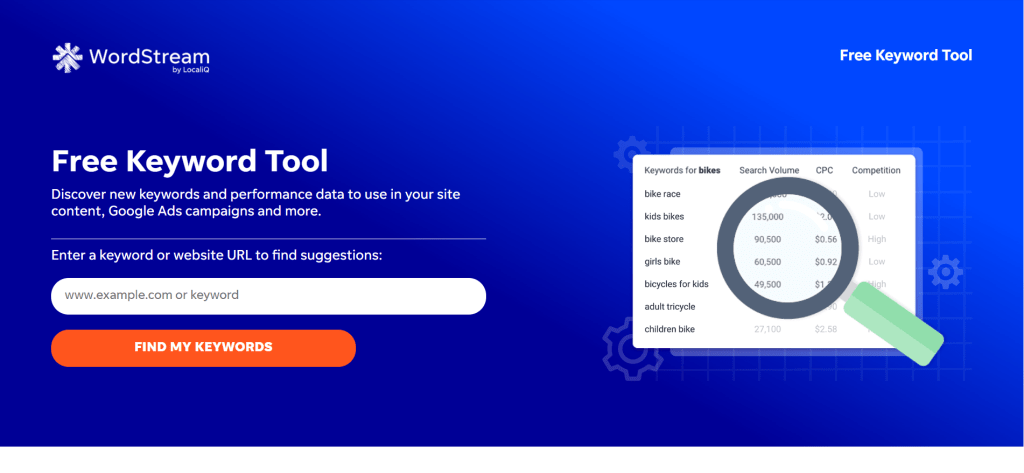
If you’re looking for a well-designed free tool to discover relevant keywords for your Shopify store, WordStream can be an option. It is useful for your online marketing efforts, particularly for Google Ads campaigns and to improve SEO. For a single keyword or URL, it returns multiple suggestions with search volume, CPC, and competition data. Its unique Opportunity Score helps prioritize keywords. You can also find negative keywords to refine ad campaigns. To access the full list you’ll just need to enter your email.
- Answer The Public
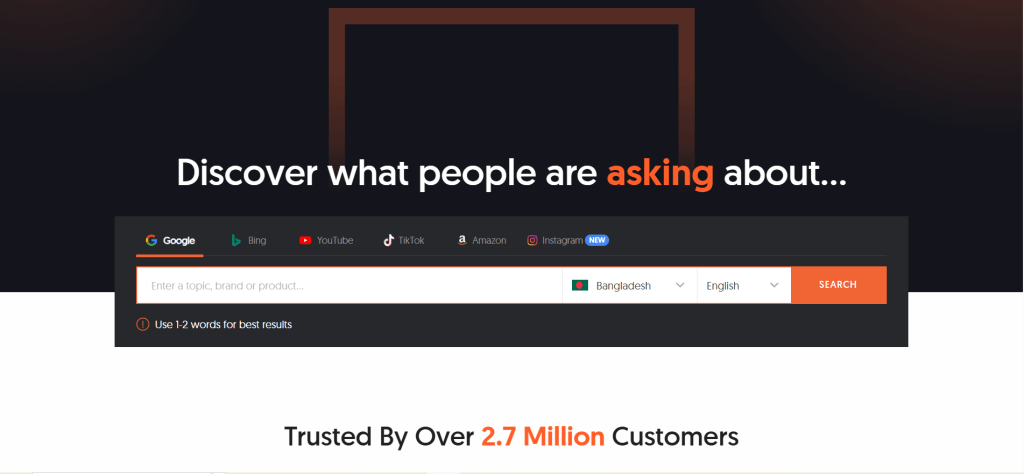
AnswerThePublic taps into search engine autocomplete data, such as Google’s. It quickly finds all the questions and phrases people search for related to your keyword. This provides invaluable consumer insight, revealing the specific queries, concerns, and needs of your target audience. By understanding these direct questions, you can create highly relevant and useful content, products, and services that directly address what your customers are truly looking for.
Keyword Research TIPS for You
- Consider Seasonal Trends and Events: With changing seasons, there come different occasions. So, think about how search behavior can also change around specific events relevant to your niche. Emphasizing timely keywords can provide a significant boost. For example, on Black Friday, people search for the best deals. So, you can write a blog on “Find the Best Shopify Black Friday Deals” and push your product and promote discounts accordingly.
- Social Media Analysis: This research uncovers valuable keywords by monitoring audience language, trending hashtags, popular topics, and engagement around relevant discussions. It provides clear insights into how your target audience talks about your niche.
- Don’t forget to Check Out Your Competitors: Visit your competitors’ websites that are already doing well in your niche. Research what keywords they are using. You can sometimes get clues just by looking at their website content and page titles. However, there are free and premium tools that can help you dig deeper into what keywords your competitors are ranking for.
Smart Moves with Your Keywords
Okay, so you’ve selected some keywords. Now what?
- Use Them Naturally in Content: Stuffing keywords everywhere is not a good strategy. Try to use them naturally in your website text, page titles, and descriptions. Imagine you’re talking to a friend, you wouldn’t repeat the same phrase over and over, would you?
- Focus on Great Content: Google really prefers good stuff. Write valuable, interesting, and engaging content that actually answers people’s questions or adds value. If your content is genuine and unique, Google is more likely to show it to people.
Check this out 👉 Creating helpful, reliable, people-first content
- Think About Specific Wants of People: Are they looking to buy something? Learn how to do something? Find a specific website? As we said before, you must ensure that your content matches what your target audiences are trying to achieve.
Monitor Your Keyword Progress
Finding keywords isn’t a one-time thing. Make a habit of checking what’s working for you and what’s not. Google Search Console is a free tool that can show you what people are searching for to find your site. This can give you even more ideas!
Remember that the digital landscape is constantly evolving. If you consistently monitor your keywords strategy, it’ll remain aligned with current search behaviors.
The bottom line?
In short, to enjoy more organic traffic by utilizing keywords is to understand your audience and then push those keywords in your content correctly. It takes a little effort, but it’s the real way to get more of the right people to find your website. Happy hunting!